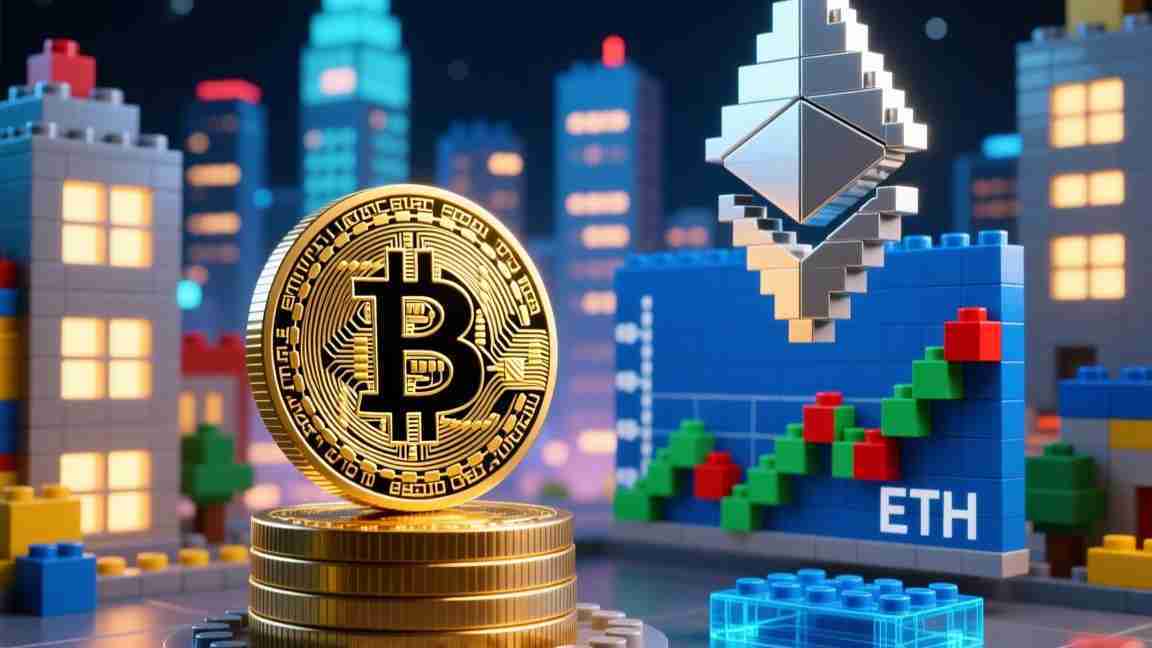
In the dynamic world of cryptocurrency, Ethereum (ETH) stands out as one of the most prominent digital assets, second only to Bitcoin in market capitalization. For investors, traders, and enthusiasts alike, tracking Ethereum’s price movements is essential for making informed decisions. A key tool in this endeavor is the K-line chart—also widely known as a candlestick chart in English. This visual representation not only summarizes price data over specific timeframes but also reveals critical patterns and trends that shape market sentiment. In this article, we’ll explore how to interpret Ethereum’s price action through K-line charts, breaking down their components, significance, and practical applications.
What Is an Ethereum K-Line Chart
At its core, an Ethereum K-line chart is a graphical illustration of ETH’s price movements over a set period, whether it’s 1 minute, 1 hour, 1 day, or even longer. Each “K-line” (or candlestick) on the chart encapsulates four critical price points: the opening price (where ETH traded at the start of the period), the closing price (where it traded at the end), the highest price (the peak within the period), and the lowest price (the trough within the period). By stringing together these candlesticks, traders gain a clear, at-a-glance view of price volatility, trends, and potential reversals.
Decoding the Anatomy of a Single K-Line
To read an Ethereum K-line chart effectively, it’s crucial to understand the structure of an individual candlestick:
- Body (the Real Body): The thick, colored portion of the candlestick represents the gap between the opening and closing prices. If the closing price is higher than the opening price, the body is typically green (or white), indicating a bullish (upward) movement. Conversely, if the closing price is lower than the opening price, the body is red (or black), signaling a bearish (downward) movement.
- Wicks (or Shadows): The thin lines extending above and below the body are called wicks. The upper wick shows the highest price reached during the period, while the lower wick displays the lowest price. Wicks highlight price extremes and can indicate rejection levels (e.g., a long upper wick suggests that buyers attempted to push ETH higher but faced selling pressure).
For example, a green K-line with a long upper wick and short lower wick might imply that buyers dominated early in the period but encountered resistance at higher prices, while sellers failed to push prices significantly lower by the close.
Timeframes: Choosing the Right Perspective
Ethereum K-line charts are flexible, allowing users to adjust the timeframe to suit their trading strategy. Common timeframes include:
- Intraday (1-minute, 5-minute, 15-minute charts): Ideal for day traders looking to capitalize on short-term price fluctuations.
- Short-term (1-hour, 4-hour charts): Useful for swing traders aiming to capture trends lasting hours to days.
- Long-term (daily, weekly, monthly charts): Preferred by investors analyzing broader market cycles and Ethereum’s long-term potential.
Shorter timeframes generate more frequent (but noisier) signals, while longer timeframes filter out noise to reveal overarching trends. For instance, a daily K-line chart might show a sustained upward trend (a series of higher highs and higher lows) even as hourly charts display minor pullbacks.
Key Patterns and What They Signal
K-line charts are not just about individual candlesticks—they’re about patterns. Recognizing these patterns can help traders anticipate future price movements:
- Bullish Engulfing Pattern: Occurs when a large green candlestick completely “engulfs” the previous small red candlestick, signaling a potential reversal from a downtrend to an uptrend.
- Bearish Engulfing Pattern: The inverse of the above—a large red candle engulfs a small green one, hinting at a trend reversal from up to down.
- Doji: A candlestick with a tiny body (where opening and closing prices are nearly identical) and long wicks. It indicates market indecision and often precedes significant price shifts.
- Hammer and Hanging Man: A hammer (green with a long lower wick) forms at the bottom of a downtrend and suggests buying pressure emerging. A hanging man (red with a long lower wick) at the top of an uptrend warns of potential selling pressure.
For Ethereum, which is influenced by factors like network upgrades (e.g., the Merge), DeFi activity, and macroeconomic trends, these patterns can provide early clues about how the market is reacting to new information.
Why K-Line Charts Matter for Ethereum Traders
Ethereum’s price is driven by a unique mix of technical factors (trading volume, market sentiment) and fundamental catalysts (e.g., staking rewards, NFT trends, or regulatory news). K-line charts bridge the gap between these elements by visualizing how price absorbs and reflects information. For example:
- A surge in trading volume配合 (paired with) a series of green K-lines on a daily chart might confirm a strong uptrend, driven by positive news about Ethereum’s adoption.
- Conversely, a long red K-line with high volume during a market selloff could signal panic selling, prompting traders to reassess their positions.
Moreover, K-line charts serve as the foundation for technical indicators like moving averages (MAs), Relative Strength Index (RSI), and Bollinger Bands, which further refine analysis. For instance, a 50-day MA plotted on a daily K-line chart can help identify whether ETH is in an uptrend (price above MA) or downtrend (price below MA).
Conclusion: K-Line Charts as a Roadmap for Ethereum’s Price Journey
In the fast-paced crypto market, Ethereum’s price can swing wildly in response to news, sentiment, and market dynamics. The K-line chart, or candlestick chart, is an indispensable tool that transforms raw price data into actionable insights. By understanding its components, timeframes, and patterns, traders and investors can navigate Ethereum’s price action with greater clarity—whether they’re scalping short-term trades or holding for long-term growth.
As Ethereum continues to evolve as a platform for smart contracts, DeFi, and Web3, mastering the art of reading K-line charts will remain a key skill for anyone looking to stay ahead of the curve. After all, in the world of crypto, knowledge of price action isn’t just about numbers—it’s about understanding the story behind the trend.